
Example of a Decision Memo
Example of a structured decision memo — context, options, recommendation — for documenting decisions with traceability.
We outline the structure of a real-life decision memo: context, options considered, recommendation and rationale — the format used by private equity firms and boards for major decisions.
A decision memo template with fixed sections and a completed example, ready to be adapted to a specific decision.
Decisions are documented along with the reasoning behind them, ensuring traceability should they be reviewed at a later date.
A 30-minute conversation to assess priorities and draw up a practical plan — together.
Frequently Asked Questions
‘Example of a Decision Memo’ is a practical example of a decision memo, the format used to document, in a structured manner, the background, the options considered and the final recommendation for an important decision.
The process combines interviews, analysis of existing data and benchmarking, followed by an action plan with clearly defined responsibilities and deadlines.
We typically involve senior management, operational teams and, where applicable, internal audit in a phased process that is tailored to the organisation’s availability.
Let’s assess your priorities and draw up a practical plan — together.
Decision support
This decision memo example shows how to present a decision to management on one or two pages: the context, the options, the risks and a clear recommendation. A decision memo is useful when a topic involves trade-offs between cost, risk and compliance, and the people deciding need to understand them quickly.
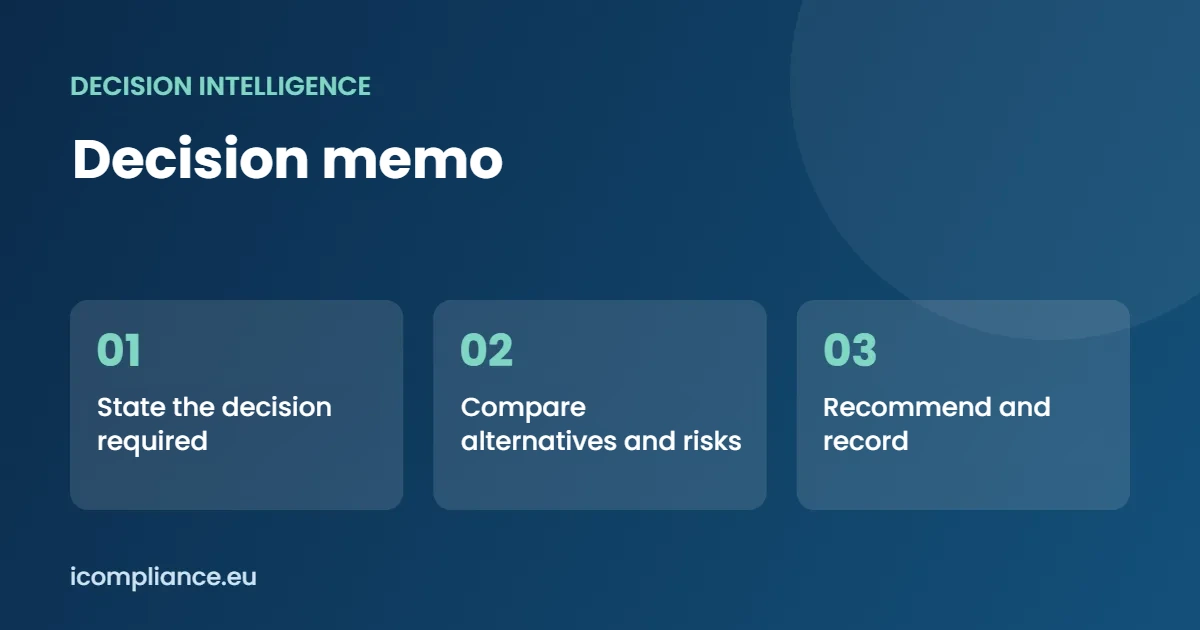
Open with the decision requested and the deadline. Then summarise the context in a few lines, list two or three realistic options and compare them on cost, risk, legal or regulatory impact and effort. Close with a recommendation, the expected benefits and the next steps, with owners and dates.
Use it for investments in controls, choices between compliance approaches, risk acceptance, supplier decisions and responses to new regulation. Because it records the options considered and the reasoning, it also shows that management took an informed decision, which matters under rules such as NIS2 that make management bodies accountable for cybersecurity risk measures.
Keep the structure and replace the content with your own facts. Quantify the impact where you can, state your assumptions clearly and name who must approve. Review the memo with the people who will implement the decision before it goes to the board.
Sources and next steps: management responsibilities under NIS2 are set out in Directive (EU) 2022/2555. Learn more about our risk and sustainability advisory or contact us.