
Executive Packs
Concise executive summaries, ranging from 2 to 4 pages, covering the key performance and risk indicators to enable management to make quick decisions.
We have consolidated the most relevant figures and risks for the period into a single document, ranging from 2 to 4 pages, designed to be read in 10 minutes by decision-makers, rather than for filing.
A reusable template with fixed sections (highlights, alerts, pending decisions) and a monthly or quarterly update process with designated responsible parties.
Management arrives at meetings already familiar with the key points, freeing up time for discussion and decision-making rather than catching up on the background.
A 30-minute conversation to assess priorities and draw up a practical plan — together.
Decision Intelligence
Executive packs are short, standardised sets of information prepared for the board of directors and top management. The goal is that decision-makers receive, in the same structure and on time, what they need to discuss and vote, without having to look for data across several reports.
A one-page summary with the points that require a decision, the main indicators with trend, the risks that changed, the status of strategic initiatives and supporting annexes for those who want more detail. Each section has an owner and a closing date, and the format stays the same from meeting to meeting.
Executive packs give directors one consistent view of performance, risk and pending decisions. Aligned with the principles of ISO 37000 on the governance of organisations, they replace long reports that few people read in full and make every meeting start from the same facts.
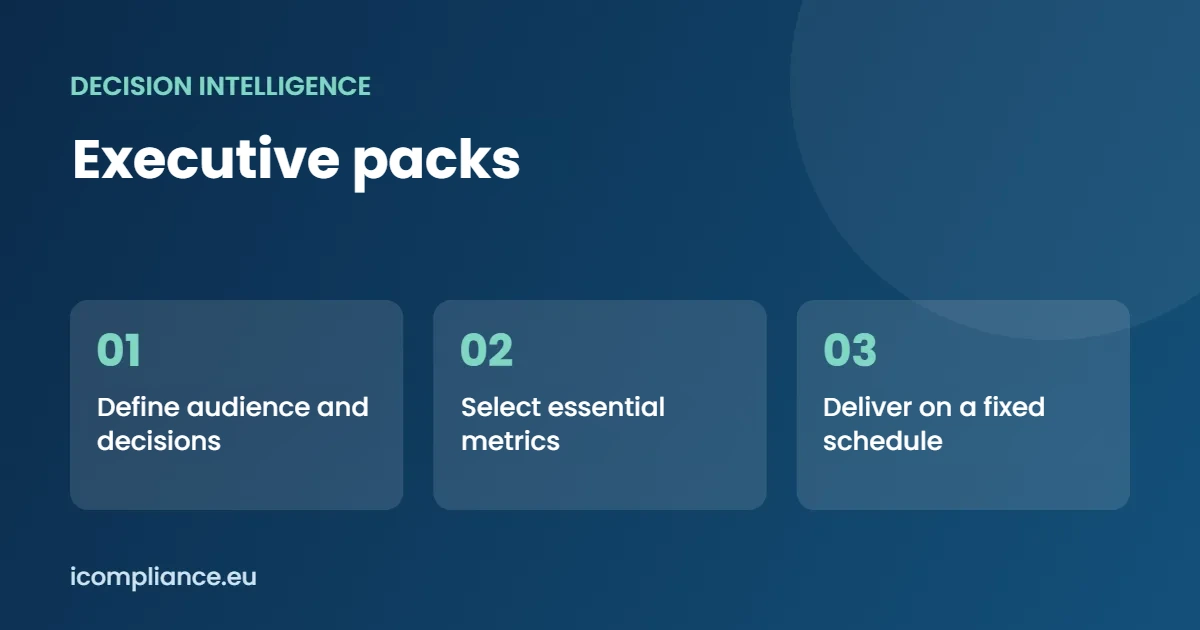
Quality depends on a single data source, agreed indicator definitions and a review process before sending. The reporting calendar should be linked to the meeting calendar, with deadlines for collection, validation and approval, and the pack should be sent early enough to be read.
The structure of the information can follow the COSO enterprise risk management approach, which links risk, performance and strategy, and the guidance of ISO 37000 on the governance of organisations.
iCompliance helps organisations design executive packs that the board reads and uses, with a short format, consistent indicators and the decisions requested. The work includes the template, the closing calendar and the automation of data collection. To understand where to start, talk to our team and receive a proposal tailored to the size and sector of your organisation.
Frequently Asked Questions
Executive Briefings are short, recurring (monthly or quarterly) documents that summarise performance, risk and pending decisions for management, replacing lengthy reports that are rarely read in full.
We work in stages: initial assessment, setting priorities, practical implementation and ongoing monitoring with clear indicators of progress.
Timeframes vary depending on the size and maturity of the organisation, but the initial assessment usually takes 2 to 4 weeks before we move on to implementation.
Let’s assess your priorities and draw up a practical plan — together.