
ESG — Use case
Development of a voluntary, balanced, and credible sustainability report for SMEs that need to report on their ESG performance.

SMEs not covered by the CSRD continue to face pressure from customers, banks, and supply chains to disclose ESG information.

We use the VSME framework to organize essential information without creating excessive complexity.

A useful report for customers, banks, and internal management.
A 30-minute conversation to assess priorities and draw up a practical plan — together.
ESG
The VSME report is the document in which an SME presents its sustainability data under the EFRAG voluntary standard. It was designed to be feasible for companies without a dedicated team, with proportionate indicators and objective language.
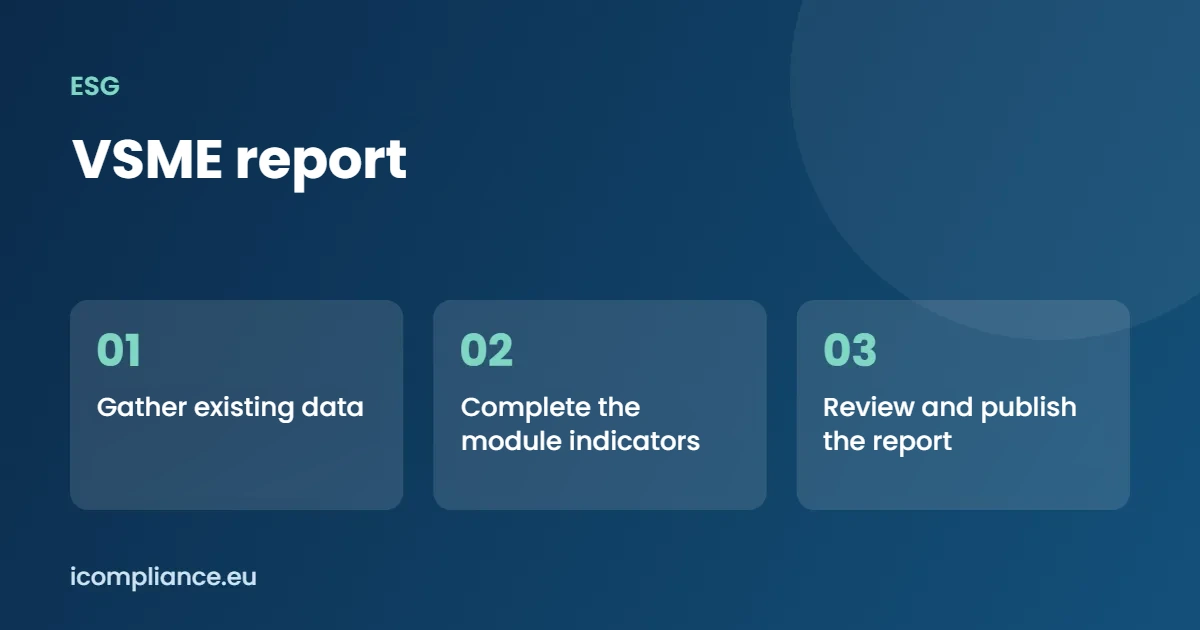
The scope and reporting period are defined, the Basic or Comprehensive module is chosen, data on energy, emissions, waste, workforce, health and safety are collected, and the indicators are completed with the respective calculation methodology. Finally, the report is reviewed internally and approved by management.
Among the most common problems are data without a documented source, poorly defined scope, mixed periods and omission of information about the methodology. It is advisable to keep the evidence for every number and prepare a version that can be shared with customers and banks without rework.
The standard and the supporting templates are described on the EFRAG page on the VSME, and the European reporting context can be found on the European Commission page.
Does the VSME report need an audit? The standard does not require assurance, but a good report should keep evidence for each data point, so that customers, banks or auditors can verify it. Some recipients may ask for an external review or a management statement.
What period should it cover? Normally the financial year, so that sustainability data is comparable with financial information. It is advisable to keep the same period and the same methodology from one year to the next.
iCompliance helps organisations build the VSME report, from gathering the data and completing the indicators to the review and the preparation of a version that can be shared with customers and banks. To find out where to start, talk to our team and receive a proposal tailored to the size and sector of your organisation.
A VSME SME report is a structured sustainability report prepared with the voluntary standard for non-listed small and medium-sized enterprises. The standard was designed so that smaller companies can respond to requests from customers, banks and investors using one common format, without the full complexity of the CSRD and the ESRS.
For many SMEs, the report becomes the main tool to answer value-chain requests. Large clients in scope of the CSRD need data from their suppliers, and a consistent VSME report allows you to provide it once and reuse it. Banks and investors also find it easier to compare companies when information follows a recognised structure.
We begin by clarifying scope: which legal entities and sites are included, which period is covered and which module of the standard is appropriate, the basic one or a broader one. Then we map the data points required, such as energy and greenhouse gas emissions, water, waste, workforce, health and safety, and business conduct information.
For each data point we identify the source, the person responsible and the method used. Where data is not available, we agree whether to estimate it with a transparent method, collect it from now on or disclose that it is not yet measured. This honest approach is preferable to unsupported figures, and it is what customers and auditors expect.
Next, we draft the narrative sections, including a description of the business model, sustainability practices and policies already in place. Many SMEs have more good practices than they realise, and the report is a chance to make them visible. Finally, we review the document for consistency and prepare a short evidence file, so each figure can be traced back to an invoice, record or policy.
A well-prepared VSME SME report reduces the effort of answering multiple questionnaires, supports conversations with banks, strengthens your position in tenders and prepares the organisation for future regulatory developments. It also creates internal discipline: once data is collected and owners are assigned, next year’s cycle is faster and cheaper.
We keep the process proportionate to your size. A first report can be completed in a short time with the information you already hold, and later improved year by year. If you are not sure whether a VSME report is the right answer for your customers’ requests, we can review them with you and recommend the most efficient route.
Timing depends on how much data you already have. Companies with organised records often complete a first report in a few weeks, while those starting from scratch need a little longer to collect information. We agree the calendar with you after a short initial review of your data.

Let’s assess your priorities and draw up a practical plan — together.